
We use cookies and measurement tools from Google to measure our ads and improve this site. By continuing to browse, you agree. You can change this anytime. Privacy Policy
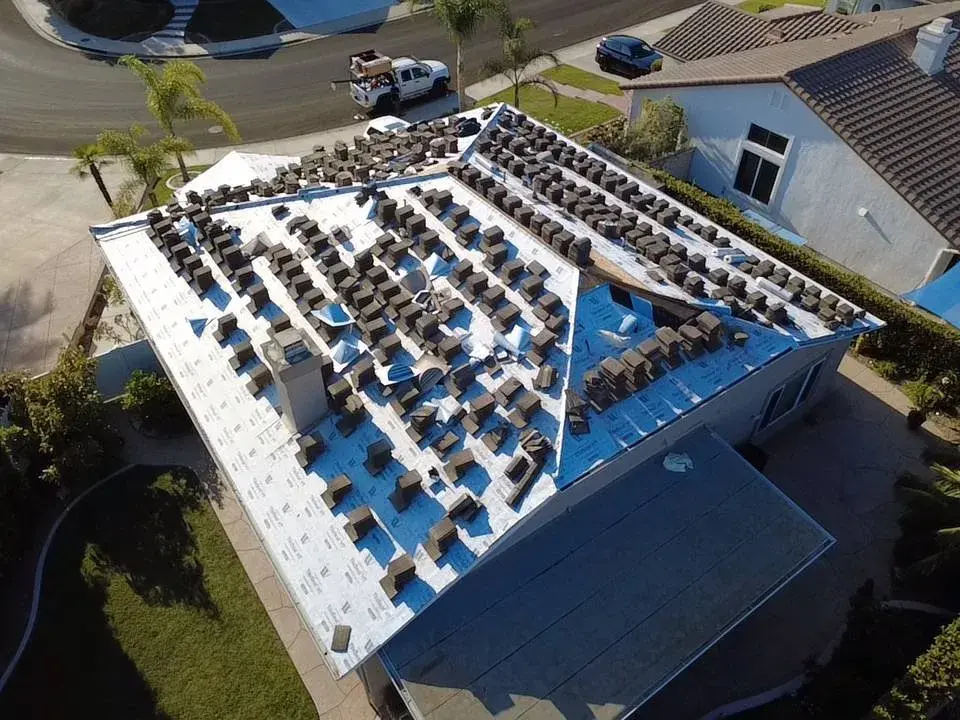
Choosing a tile vs shingle roof in Los Angeles depends more on the house than on the material. Clay or concrete tile suits a Spanish or Mediterranean house whose framing can carry its weight. Asphalt shingle suits most other houses: it is lighter and usually costs less to install. Both can reach a Class A fire rating when installed as a listed assembly.
The table below puts the two side by side. After it: how each roof ages, whether your house can take tile, what changes when you switch from one to the other, and how to get both priced. Code references are to the 2025 California Residential Code and the City of Los Angeles rules in force in October 2026, with sources at the end.
Deciding between tile and shingle for a re-roof? Book a free estimate online and ask AA California Roofing to price both on your house.
“Tile” here means clay or concrete roof tile, and “shingle” means asphalt shingle. Each row is a question that comes up on a Los Angeles re-roof.
| What you are weighing | Clay or concrete tile | Asphalt shingle |
|---|---|---|
| House style | Spanish, Mediterranean and other houses designed around tile | Most other styles, and houses built for a light roof |
| Up-front cost | Usually higher: heavier material, more labor and, on some houses, structural work | Usually lower, as tile makers’ own comparisons acknowledge |
| What wears out first | The underlayment under the tiles; sound tiles can be lifted and relaid on new underlayment | Shingles and underlayment age together and are replaced together |
| Weight | Heavier than asphalt shingle; some makers sell lightweight concrete profiles | The lighter of the two |
| Minimum slope | 2 1/2 in 12, with two layers of underlayment up to 4 in 12 | 2 in 12, with two layers of underlayment up to 4 in 12 |
| Roof deck | Wood structural panels or solid lumber sheathing | Wood structural panels or solid lumber sheathing |
| Fire rating | Class A as a listed assembly; on a wood deck the listing names the underlayment and details | Class A on products tested to ASTM E108 or UL 790; check the product’s listing |
| Cool-roof options | Cool-rated tile in a wide range of colors; the City’s fact sheet says little or no added cost | Cool-rated shingles from white to dark colors; the City’s fact sheet says costs can rise for colors other than white |
| Repairs | Broken tiles are replaced one at a time; tile cracks underfoot, so repairs need a crew that works on tile | Damaged shingles are replaced in a patch |
| Permit in the City of Los Angeles | Express permit only when Class A or B, on solid sheathing and under 6 pounds per square foot; heavier tile goes through plan check first | Express permit when the product is Class A or B, on solid sheathing and under 6 pounds per square foot |
| Laying over the old roof | Never: tile cannot be covered over and comes off to the deck | Allowed over one sound layer of roofing, never over two layers or over tile |
Lifespan figures are left out on purpose: they depend on the product, the underlayment and the installation. How the two roofs age is explained below.
Usually, yes, at the time of installation. Even tile makers’ own comparisons say an asphalt shingle roof may be cheaper initially. The gap on a given house comes from a handful of lines in the quote:
The comparison also changes at the next re-roof: sound tiles can be relaid on new underlayment instead of bought again. Our roof replacement cost guide explains each of these cost drivers in detail.
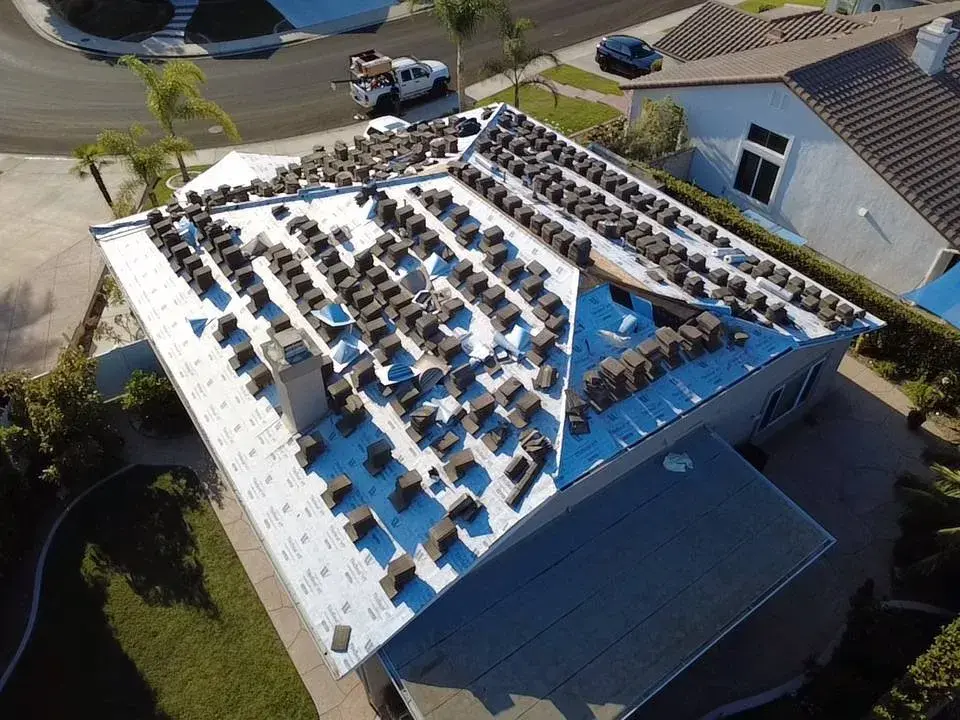
Every roof here has two layers that matter: the covering you see and the underlayment under it, a sheet of felt or synthetic membrane fastened to the deck. California’s code requires underlayment under both tile and asphalt shingle (2025 California Residential Code, section R905.1.1), but the two roofs depend on it in different ways.
On a tile roof, the tiles shed most of the water and the underlayment stops what wind and heavy rain push under them. The tiles usually outlast that underlayment, so a tile roof’s life usually runs in underlayment cycles. When the underlayment wears out, the tiles come off, new underlayment and flashing go down and the sound tiles go back on. The code allows existing clay and cement tile to be reinstalled, except damaged, cracked or broken pieces (section R908.5), and LADBS issues this job as its own express permit.
On a shingle roof, the shingles and the underlayment wear out together. When the shingles are done, the whole covering comes off and both are replaced.
So the useful comparison is not one number against another. Tile usually gives you a covering you can reuse over more than one underlayment, minus any damaged or cracked tiles; shingle gives you a roof that is renewed as one system. The signs that a tile roof’s underlayment is failing are on our tile roofing page.
If the house has shingles now, weight is the first question. Concrete roof tile is heavier than asphalt shingle, as tile makers state themselves, and the code requires the roof structure to carry the roof covering plus the materials and equipment loaded onto it during the job (2025 California Residential Code, section R908.2).
In the City of Los Angeles, a new roof covering gets an express permit, issued without plan check, only when it is rated Class A or B, goes over solid sheathing and weighs less than 6 pounds per square foot (LADBS Information Bulletin P/GI 2026-003). A heavier product goes through plan check before the permit is issued, and that is where the city looks at the structure. Ask for the installed weight per square foot of the exact tile you are considering: it decides which path your job takes. Our roofing permit guide covers the rest of the permit, from who pulls it to the inspections.
Some makers sell lightweight concrete tile profiles for re-roofs, at a fraction of the weight of their standard tile, and they advise homeowners to ask their roofing contractor whether one suits the house. Lighter does not by itself mean under the 6-pound line, so the product’s own data still decides the permit path.
If nobody knows what the framing can carry, or plan check asks for calculations, the answer comes from a licensed structural engineer, not from a roofer’s estimate. Any strengthening the engineer calls for is part of the tile option’s scope and price, so put it into the comparison before you decide, not after.
Changing material is a full re-roof, and a few rules apply that never come up when you replace like for like.
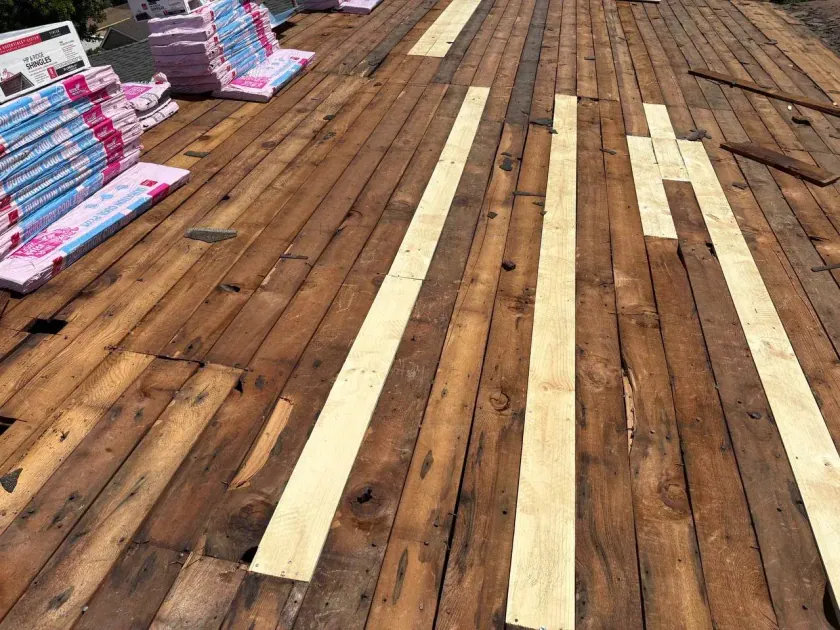
Tile to shingle. Tile can never be covered over, so the old roof comes off to the deck (2025 California Residential Code, section R908.4). Shingles must be fastened to wood structural panels or solid lumber sheathing (section R905.2.1), so the deck is checked and any gaps or soft boards are sheathed or replaced first. The roof also needs at least 2 in 12 of slope, with a double layer of underlayment up to 4 in 12 (section R905.2.2). On a Spanish or Mediterranean house, the change is plain to see from the street.
Shingle to tile. The structure question above comes first, then the slope: tile needs at least 2 1/2 in 12, with a double layer of underlayment up to 4 in 12 (section R905.3.2). A shallow roof that carries shingles today can be too flat for tile.
Either way, cool-roof rules apply. Replacing more than half of the roof on a house brings in California’s Title 24 cool-roof values where the climate zone has them, and inside the City of Los Angeles the city’s own Green Building Code rule. Our cool roof requirements guide has the numbers for each roof type.
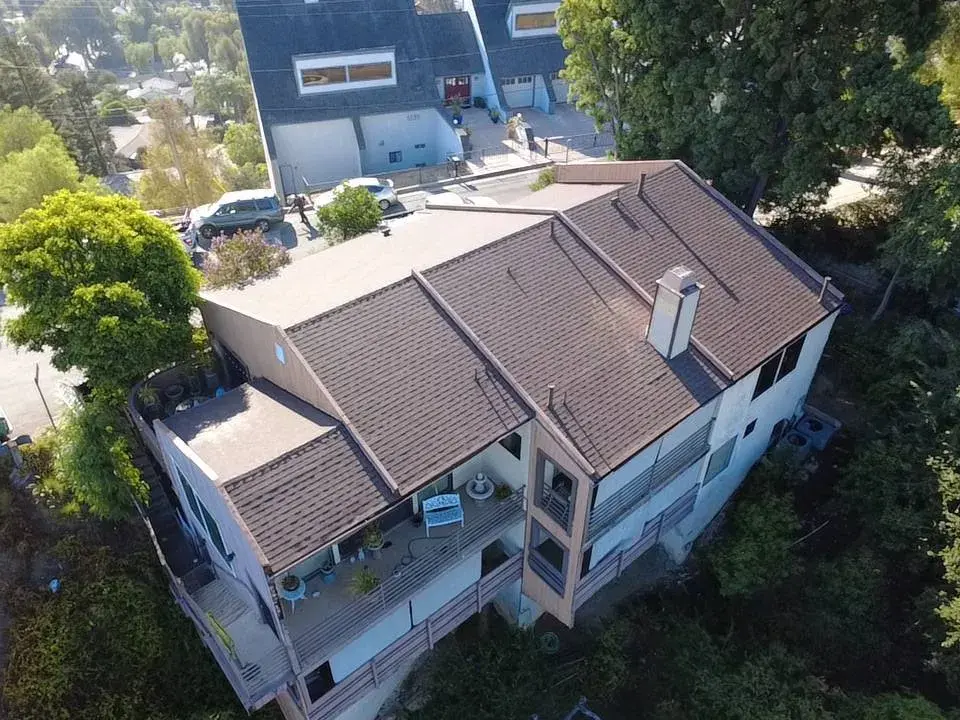
Not on every house. Tile is the better roof where the house was designed for it and can carry it; shingle is the better roof almost everywhere else. These are the situations that tip the choice.
Fire rating rarely decides it: both coverings can reach Class A, so in a Fire Hazard Severity Zone the choice rests on the listed assembly and its details. Tile in those zones has extra underlayment and eave rules of its own.
The quickest way to settle tile vs shingle on your house is a quote that prices both on the same roof. Ask for each option to show:
Those lines are where the tile roof vs shingle roof cost difference comes from. For the replacement process with either covering, see roof replacement and new roof installation, and for permits, cost and repair questions, our Los Angeles roofing guides.
AA California Roofing installs tile and shingle roofs across Los Angeles County and nearby Ventura County cities, under California Contractor License #1147688 (C-39 Roofing). Book a free estimate and we will price both options on your house.