
We use cookies and measurement tools from Google to measure our ads and improve this site. By continuing to browse, you agree. You can change this anytime. Privacy Policy
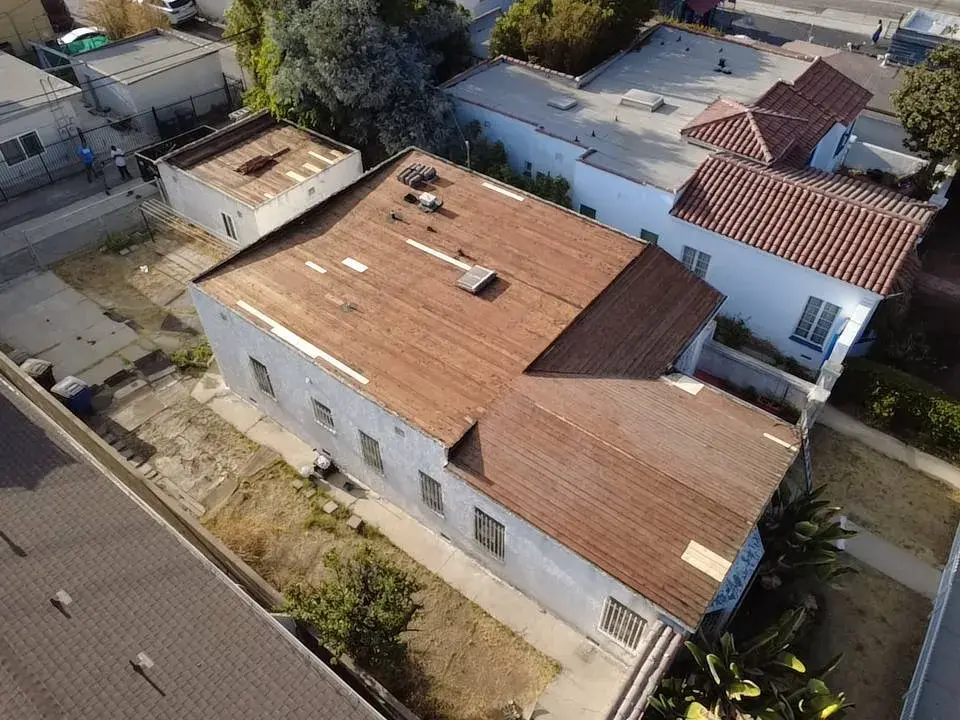
Roof repair or replace comes down to how far the damage has spread. Repair a roof when the damage is limited to one area and the rest of the roof has years left; replace it when leaks keep coming back in different places, the material is near the end of its life or the deck is soft. A roofer’s inspection with photos shows which case you are in.
In Los Angeles there is a third question: how much of the roof the work touches. Once more than half of a roof is replaced, the cool-roof rules, and in fire hazard zones the fire-rating rule, apply to the job. That line changes the price of a “big repair”, so it belongs in the decision.
Have a leak and not sure which way to go? Book a free estimate on your roof through AA California Roofing’s contact page.
Find the row closest to what you see. Most roofs fit one of these, and the middle rows are the options people often do not know they have.
| What you see | Usual answer | Why |
|---|---|---|
| One leak at a vent, chimney, skylight or wall joint; the rest of the roof looks sound | Repair | Flashing, where the roof meets something else, is a common leak point and can be fixed on its own |
| A few shingles lifted or missing, or a few cracked tiles, after a windstorm | Repair | Damage is local and the surrounding roofing is still bonded and intact |
| Tile roof with sound tiles, leaking through the layer underneath | Tile reset | Sound tile can be lifted, new underlayment installed and the tiles relaid |
| Flat roof with a worn surface but a watertight membrane | Coating | An approved coating can go over the existing roof without tear-off |
| Leaks in several places, or new leaks after each repair | Replace | The roofing is failing as a whole, not at one point |
| Shingles curling, cracking or worn bare across whole slopes | Replace | Weathering this widespread is not something a patch can fix |
| Soft, sagging or water-soaked deck | Replace | New roofing cannot go over a deck that will not hold fasteners |
| Two layers of roofing already on the house | Replace (tear-off) | The code does not allow a third layer over two |
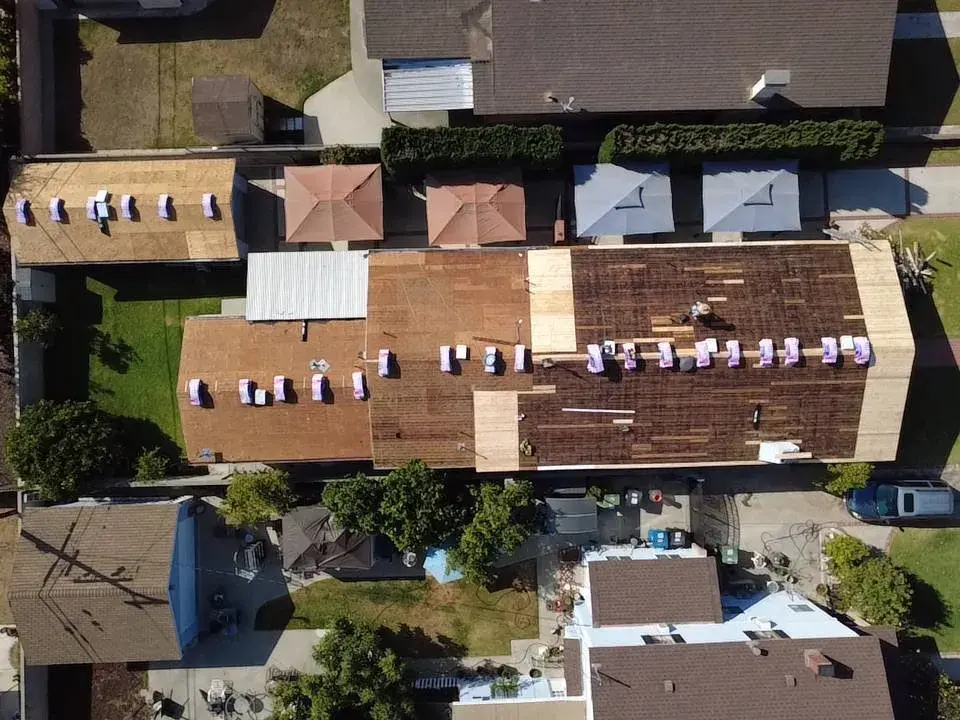
A repair makes sense when the problem has a clear edge: you can point to where it starts and stops, and the roofing around it is still doing its job.
Our roof repair service covers leak repairs, storm damage and emergency work across Los Angeles County.
Replacement becomes the better buy when the problems are spread out, keep returning, or sit under the roofing where a patch cannot reach them.
When the answer is a new roof, our roof replacement service page explains how we run the job.
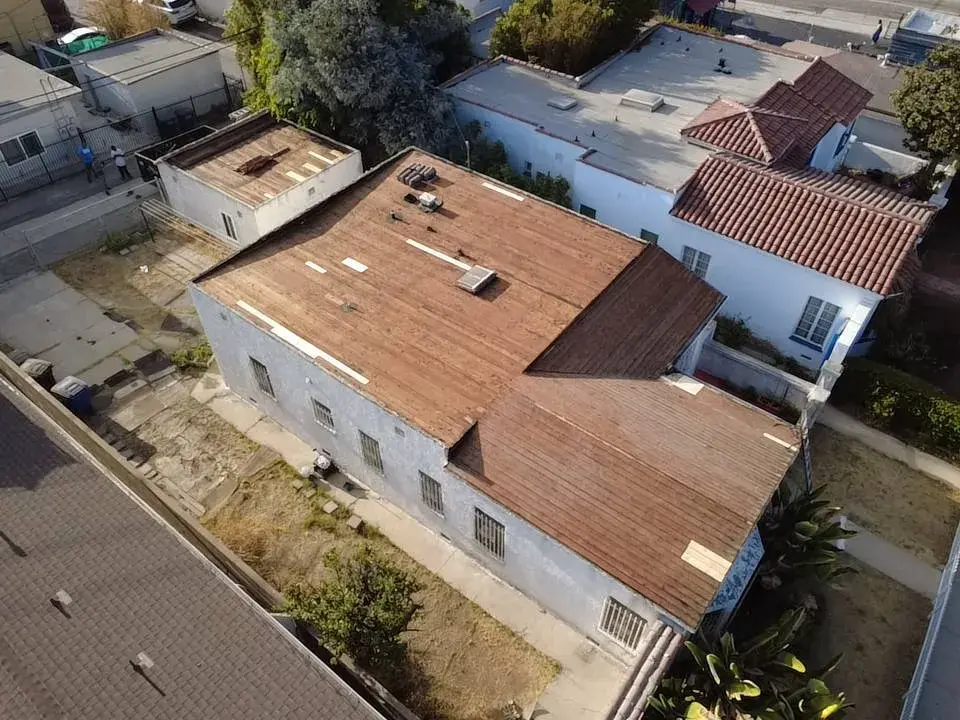
There is no single number that tells you when a roof is done. Lifespan depends on the product, how it was installed, attic ventilation and how much sun the roof takes, so a table of “average years” can be off by a decade for your house. Two facts about your own roof are worth more than any average:
Shingles age at the surface: they lose granules, stiffen, curl and crack. A 20-year-old shingle roof is not automatically finished; compare its age with the product’s rating, then look for the widespread signs above. If the curling and bare spots cover every slope, a repair buys little time.
Tile roofs fail differently. Leaks can come from the underlayment beneath the tiles or from flashing while the tiles themselves are still sound, and the code allows existing clay or concrete tile to be reinstalled unless it is damaged, cracked or broken. LADBS issues a separate express permit for removing tiles, installing new underlayment and resetting the tiles, and that work does not have to meet the cool-roof rule. For a leaking tile roof with sound tiles, that middle path is worth pricing before a full replacement.
Low-slope roofs show age as blisters, split seams, ponding water and soft insulation. While the membrane is still watertight, an approved coating over the existing roof is allowed without tear-off, and LADBS lists roof coating as its own express permit. Once water is inside the system, the roof is no longer a sound base and needs replacing.
Replacing wood shakes with another material counts as an alteration, not a repair, under the state Energy Code’s definition of a repair (replacing a component the code regulates is an alteration), so the cool-roof rules apply when more than half the roof is replaced. In a Very High Fire Hazard Severity Zone, the LADBS express re-roof permit also requires Class A roofing.
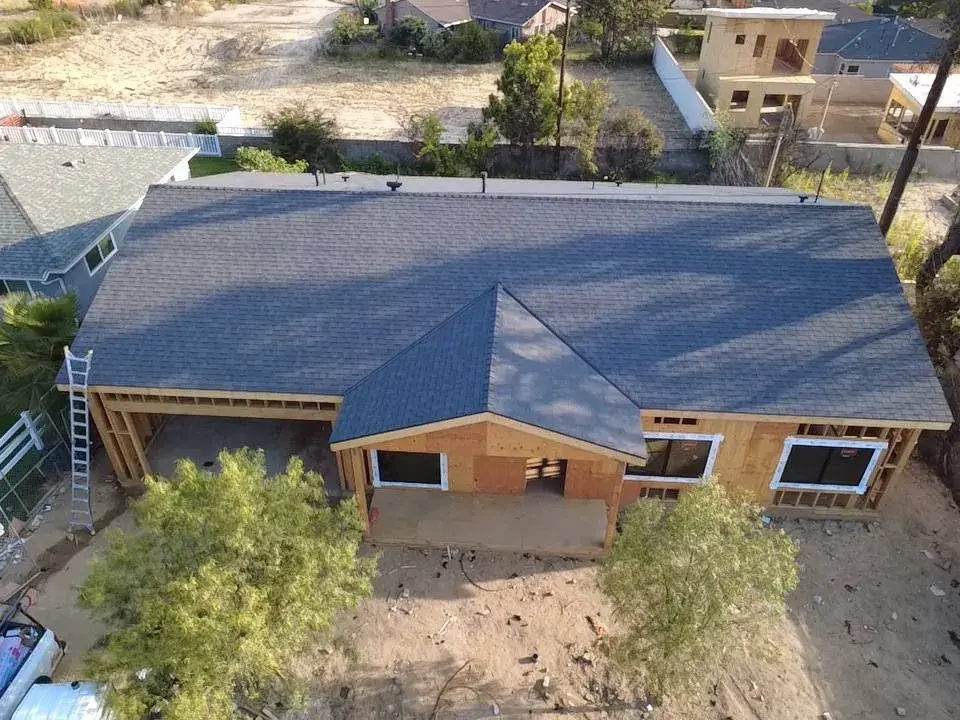
An inspection turns a guess into a decision. A useful one leaves you with photos and a written recommendation, and it covers what you cannot see from the yard:
Our customers’ Google reviews mention inspections “without any tricks or hidden fees”. Read more on our roof inspection page.
This guide gives no prices, because they depend on your roof. What it can show is how the two paths add up over time.
Our roof replacement cost guide breaks down what goes into a replacement price, and our cool roof guide covers the 50% rules in detail.
For a flat roof in the Valley, the climate zone shapes the answer. The Energy Commission’s ZIP code list puts Valley neighborhoods such as 91364 Woodland Hills and 91601 North Hollywood in climate zone 9.
Torch-down is one of the systems we use on flat roofs; see our flat roof services.
Not as a promise. The year number a shingle is sold under is its maker’s limited warranty term (TAMKO and Malarkey print their terms that way, in months, years or as “lifetime”), not a forecast of how long the roof will keep water out. The warranty is a remedy if a manufacturing defect makes the shingles leak; how long your roof really lasts depends on the installation, the attic ventilation and the sun and weather it takes.
The makers say so in their own paperwork. TAMKO’s current shingle warranty has a section on how long shingles last and concludes that, because no two buildings age the same way, it is difficult to predict accurately. It and Malarkey’s posted shingle warranty share four terms:
So the rating marks the outer edge of the maker’s promise, not a schedule for your roof. And TAMKO’s warranty says the version in effect on the date the shingles were bought is the one that applies, so an older TAMKO roof answers to its own year’s paperwork, not today’s.
Not by age alone. A 20-year-old shingle roof can still be repaired when the damage has a clear edge and the deck is firm; when curling, cracking and bare spots show across every slope, replacement is the better buy. Before you decide, confirm the age from a record, not an estimate. Look for the install year here:
Then weigh the year against the condition: compare it with that product’s warranty paperwork (see the 30-year question) and have every slope and the attic checked in a roof inspection. Age also matters to your insurer; how a claim on an older roof is paid depends on your policy type, explained under insurance on an older roof on our roof repair page.
AA California Roofing is a licensed California roofing contractor (C-39), CSLB License #1147688, doing both repairs and replacements across Los Angeles County and nearby Ventura County cities. Our published Google reviews include a roof repair in Santa Monica and a roof replacement in Pasadena.
Request a free estimate and find out which case your roof is in. More homeowner answers are in our roofing guides.