
We use cookies and measurement tools from Google to measure our ads and improve this site. By continuing to browse, you agree. You can change this anytime. Privacy Policy
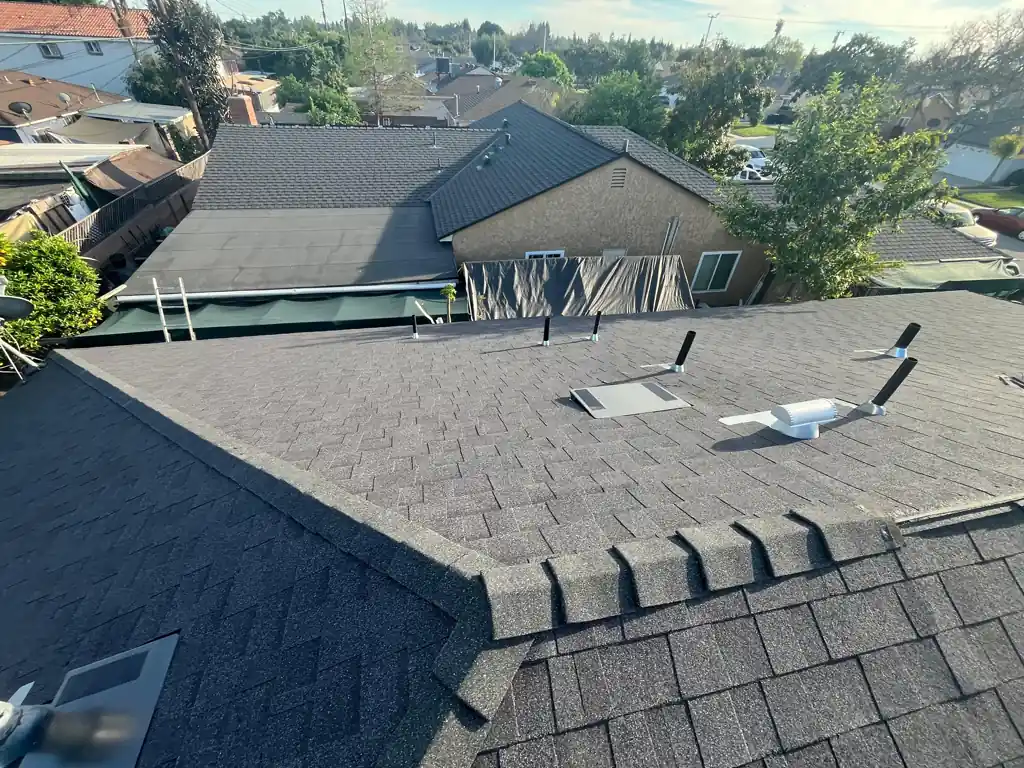
Fire-resistant roofing is a roof assembly rated Class A, the top rating of the ASTM E108 and UL 790 fire tests, with its edges, vents and gaps closed to wind-blown embers. Clay and concrete tile, metal, slate and asphalt shingle products tested for it can all reach Class A, as long as they are installed as the listed assembly.
In Los Angeles that rating is also a code requirement in the fire hazard zones. The residential code sends roofing in a Fire Hazard Severity Zone or a Wildland-Urban Interface area to the California Wildland-Urban Interface Code, which requires a Class A roof assembly, and LADBS requires Class A roof covering on a re-roof in the city’s Very High Fire Hazard Severity Zone. Outside the zones, the residential code asks for at least Class C. Code references are to the 2025 California codes, checked in October 2026, with sources at the end.
A roof gets its fire class from a standard fire test: ASTM E108 or UL 790, the two standards the code names. The test sets a sample roof on fire from the outside in several ways: a spread of flame test across the surface, an intermittent flame test, and a burning brand test, where a burning wood brand is set on the roof to see whether fire gets through to the underside of the deck.
The result is one of three classes. Class A coverings are expected to hold up against severe fire exposure, Class B against moderate exposure and Class C against light exposure. In every class the covering has to protect the deck, stay in place and not throw off burning pieces of itself.
California’s residential code says that where a fire class is required, the roof assembly is tested and is listed and identified as to class by an approved testing agency (2025 California Residential Code, section R902.1). The assembly is the covering plus what sits under it: the underlayment, any cap sheet or barrier, and the deck. That is why a listing names the parts that go together, and why the wildfire code asks for the underlayment to be installed according to its listing (California Wildland-Urban Interface Code, section 504.2.1.2).
The code lets a few coverings count as Class A without that test, among them clay or concrete tile and metal, but only when they sit on a noncombustible deck (slate has its own route over a wood deck, on ASTM D226 Type II underlayment). On a house with a wood deck, a tile or metal roof is Class A only when it is installed as a listed Class A assembly.
Re-roofing in a fire hazard zone? Book a free estimate online and ask AA California Roofing to quote a Class A roof assembly for your house.
| Roof covering | How it reaches Class A | What to check |
|---|---|---|
| Clay or concrete tile | As a listed Class A roof assembly over a wood deck, or by code on a noncombustible deck | The underlayment or cap sheet the listing names, bird stops at the eaves and mudded hip and ridge caps |
| Asphalt shingle | Products tested to ASTM E108 or UL 790 are sold with a Class A rating | The product’s own Class A listing and the underlayment it calls for |
| Metal panels or metal shingles | As a listed assembly over a wood deck, or by code on a noncombustible deck | The listed assembly for a wood deck; on profiled panels, how the open ends are closed |
| Slate | By code over ASTM D226 Type II underlayment on a wood deck | That the underlayment is the type the code names |
| Wood shakes and shingles | Only fire-retardant-treated products tested and labeled for a class | The class on the bundle label; CAL FIRE warns that homes with wood shingle roofs are at high risk in a wildfire |
CAL FIRE’s home hardening guidance names the roof as the most vulnerable part of a house and points homeowners to composite, asphalt, metal, clay or tile roofing. AA California Roofing installs both tile and shingle roofs, and our tile vs shingle roof guide compares the two on weight, cost drivers and the rest of what matters beyond fire.
Fire Hazard Severity Zones are drawn by the State Fire Marshal at three levels: moderate, high and very high. They measure hazard (the fuel, slope, weather and embers expected over 30 to 50 years), not the risk of a single house. The maps for State Responsibility Areas took effect on April 1, 2024, and the Fire Marshal released recommended maps for Local Responsibility Areas, where cities and counties fight fires, in four phases between February and March 2025.
The residential code sends roofing on a structure in a Fire Hazard Severity Zone or a Wildland-Urban Interface area to the California Wildland-Urban Interface Code (section R902.1.1). That code’s own scope section names new buildings in State Responsibility Areas, in High and Very High zones mapped in cities and counties, and in local Wildland-Urban Interface areas; Moderate zones in cities and counties are not on its list (section 101.3.1). The building department that issues your permit decides how these roofing rules apply to a re-roof of your house. Where the code applies, it requires:
Inside the City of Los Angeles, the LADBS express permit for a re-roof covers Class A or Class B roofing under 6 pounds per square foot over solid sheathing, and requires Class A roof covering within the Very High Fire Hazard Severity Zone.
State law says the same for Very High zones and adds a timing rule (Health and Safety Code section 13132.7): any roof covering applied in a repair or replacement has to be at least Class A, and when more than 50 percent of the total roof area is replaced within any one-year period, the entire roof covering has to be, not just the new part. That Class A rule does not apply in a jurisdiction that has adopted the State Fire Marshal’s model ordinance, or one that substantially conforms to it, and sent a copy to the Fire Marshal, which is one more reason to confirm the rule with the department that issues your permit.
Outside the fire hazard zones, any roof covering applied in a repair or replacement has to be at least Class C (residential code section R902.1.2). Outside the city, the permit and the zone rules come from each city’s own building department or, in unincorporated areas, Los Angeles County Public Works. Our roofing permit guide lists who issues the permit where and what the inspection covers.
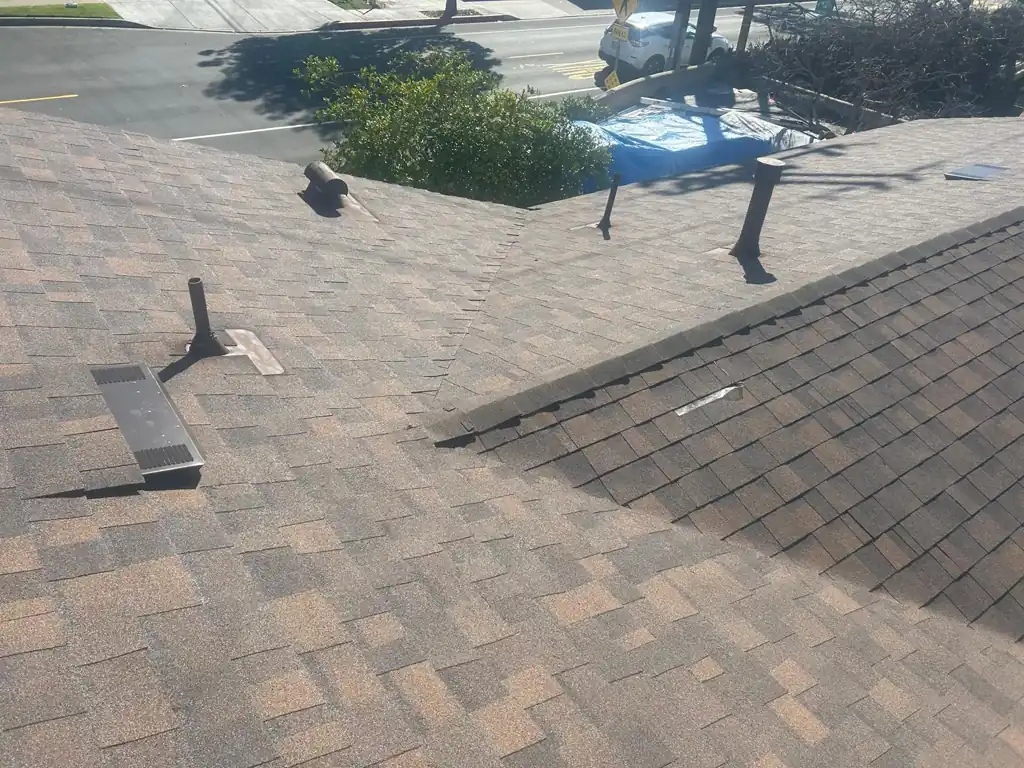
A Class A covering resists flames on its surface. Embers are the other threat: CAL FIRE notes that burning embers can ignite homes up to a mile away from the fire itself. They ride the wind, land in debris and slip into any opening they find. These are the places on a roof where they get in, and what the state’s guidance says to do about each:
A roof that passed its fire test when it was new can still catch embers if debris piles up on it or a vent screen tears. A short check before the dry season keeps the details doing their job:
Climbing a tile roof can break tiles, so this is a job to book rather than do from a ladder. A roof inspection shows what needs repair before anything gets worse. When the roof is due for replacement anyway, the Wildland-Urban Interface Code’s own home hardening appendix recommends replacing it with a Class A roof assembly.
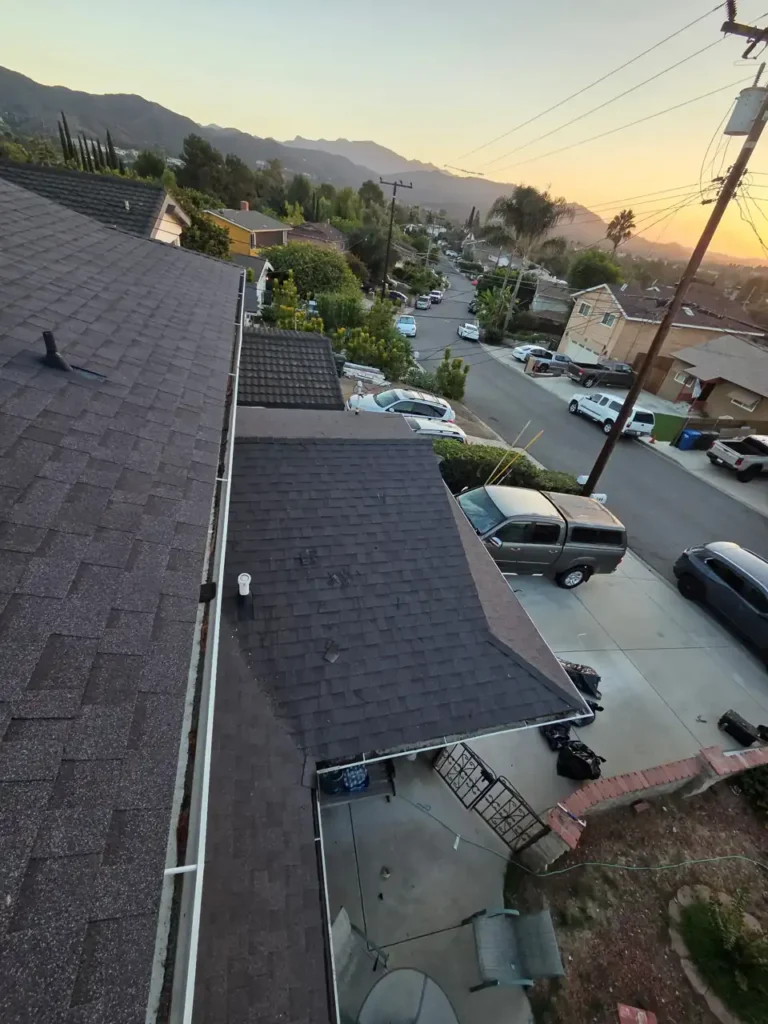
The zone decides which rules apply, so it is worth knowing before you choose a material:
On insurance, the State Fire Marshal’s page relays a California Department of Insurance consumer alert stating that the CAL FIRE hazard maps do not affect insurance rates or availability.
A quote for a fire-resistant roof should show more than the shingle or tile name. Ask that it lists:
For the replacement itself, see roof replacement and new roof installation, and for tile work, tile roofing. More homeowner answers on permits, cost and cool roofs are in our Los Angeles roofing guides.
AA California Roofing installs tile and shingle roofs across Los Angeles County and nearby Ventura County cities, under California Contractor License #1147688 (C-39 Roofing). Book a free estimate and we will quote a Class A roof for your house.